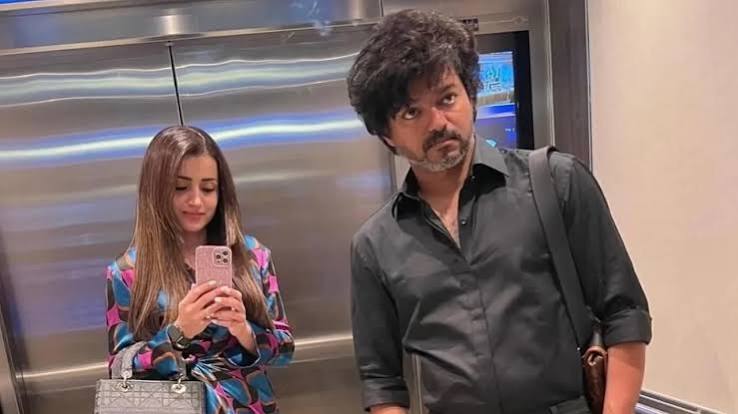
Vijay and Trisha Krishnan are two of the most recognisable names in Tamil cinema. Vijay built his career as a leading star with a large theatrical following, while Trisha established herself as one of South Indian cinema's most prominent actresses. Their individual careers are very different, but their movies together created an on-screen partnership that continues to attract attention from Tamil movie audiences.
Vijay's Journey in Tamil Cinema
Vijay developed from a young lead actor into one of Tamil cinema's biggest commercial stars. Over the years, his films have covered romance, comedy, family drama and large-scale action entertainment.
Movies such as Ghilli, Thuppakki, Kaththi, Mersal, Master and Leo represent different stages of his career. His popularity has also helped his major releases generate significant opening-day interest in Tamil Nadu and several overseas markets.
Trisha's Journey in South Indian Cinema
Trisha Krishnan has maintained a long career across Tamil and Telugu cinema while also appearing in other Indian-language productions.
Her filmography includes romantic dramas, commercial entertainers and character-driven movies. Films such as Saamy, Ghilli, Varsham, Vinnaithaandi Varuvaayaa, 96 and the Ponniyin Selvan films helped establish different phases of her career.
Her longevity has made her one of the most familiar leading actresses to multiple generations of South Indian movie audiences.
Vijay and Trisha Movies Together
Vijay and Trisha have appeared together in several Tamil films. Their major collaborations include Ghilli, Thirupaachi, Aathi and Kuruvi.
After a long gap, they reunited as the lead pair in Leo, directed by Lokesh Kanagaraj. Trisha played Sathya, the wife of Vijay's character Parthiban.
Their reunion became one of the notable talking points surrounding Leo because audiences had not seen them together as a lead pair for many years.
Ghilli: The Pairing That Became Iconic
Ghilli, released in 2004, became one of the most important films in both Vijay and Trisha's careers.
Vijay played Velu, while Trisha played Dhanalakshmi. The movie combined action, romance, comedy and fast-paced commercial storytelling.
Its songs, comedy sequences and character interactions remained popular long after the original theatrical release. The success and continuing popularity of Ghilli played a major role in making Vijay and Trisha a memorable Tamil cinema pairing.
Thirupaachi
Vijay and Trisha appeared together again in Thirupaachi, released in 2005.
The film presented Vijay in a mass-oriented action role while also incorporating family emotions and romance. Trisha played the female lead.
Coming after Ghilli, Thirupaachi strengthened the familiarity of the Vijay-Trisha pairing among Tamil audiences during the mid-2000s.
Aathi and Kuruvi
Their collaborations continued with Aathi in 2006 and Kuruvi in 2008.
These movies gave the pair additional appearances together during a period when both actors were major mainstream names in Tamil cinema.
Not every collaboration achieved the same reception as Ghilli, but the repeated pairing helped create strong recognition among audiences and contributed to the nostalgia surrounding their later reunion.
The Long Gap Before Leo
After Kuruvi, Vijay and Trisha did not appear together as the principal pair for many years.
During that period, both continued developing their careers independently. Vijay moved further into large-scale commercial films, while Trisha took on a variety of roles across South Indian cinema.
This long separation increased audience interest when their reunion was eventually announced for Leo.
Vijay and Trisha Reunite in Leo
Leo brought Vijay and Trisha back together on screen in 2023 under director Lokesh Kanagaraj.
Unlike the youthful romantic dynamic associated with some of their earlier films, Leo presented them as a married couple with a family. Vijay's Parthiban attempts to protect his family while becoming involved in an increasingly dangerous conflict.
The different relationship dynamic allowed audiences to see the familiar pair in a more mature setting while retaining the nostalgia associated with their earlier collaborations.
Vijay vs Trisha: Two Different Career Paths
A direct career comparison between Vijay and Trisha requires context because they have occupied different positions within the film industry.
Vijay's career has increasingly centred on leading large commercial productions where his star power is a major part of the movie's theatrical appeal.
Trisha's career has included commercial heroine roles as well as romantic dramas, ensemble productions and performance-focused characters.
Rather than treating their careers as identical, their longevity can be understood through the different ways each has remained relevant to audiences.
Why Audiences Still Celebrate the Vijay-Trisha Pairing
Nostalgia is an important reason for the continuing popularity of Vijay and Trisha as an on-screen pair.
Audiences who watched Ghilli and their other collaborations during the 2000s encountered the same actors again many years later in Leo. This created a connection between two different periods of Tamil cinema.
Songs, television broadcasts, streaming availability and discussions on social media have also helped older films remain familiar to younger audiences.
Their Most Important Film Together
Among their collaborations, Ghilli holds a particularly important place because of its lasting popularity and its significance in their careers.
Leo represents another major chapter because it reunited the pair after a long interval and introduced their chemistry to a new generation of moviegoers.
Together, their collaborations span different periods of Tamil cinema and show how a successful screen pairing can remain part of popular culture long after its earliest films were released.
Vijay and Trisha's Lasting Screen Legacy
Vijay and Trisha built successful careers independently, but their collaborations created a distinct place in Tamil cinema's commercial history.
From the energetic romance and action of Ghilli to the more mature family relationship presented in Leo, audiences have seen their screen partnership evolve over time.
Their enduring popularity demonstrates that memorable movie pairings are shaped not only by the number of films actors make together, but also by the cultural impact and audience memories created by those films.